
"French Caribbean agriculture"
200 article(s) found

Colombia coffee origin history Colombia four major estates in fine or more expensive
Colombia Coffee History The history of coffee cultivation in Colombia can be traced back to the Spanish colonial era in the 16th century. There are also many sayings about the history of coffee in Colombia: First, it is said that it came from Haiti in the Caribbean Sea through El Salvador in Central America. Coffee beans were first introduced by a priest from the French Antilles via Venezuela in 1808.

Introduction to the flavor and taste characteristics of Puerto Rico boutique coffee bean manor
In 1898, the Spanish-American War broke out and Spain was defeated. According to the Treaty of Paris, Puerto Rico was ceded to the United States. The administrative jurisdiction of the United States over Puerto Rico first took the form of a military junta. During its two years of governance of the island, the junta established schools, roads, railways, hospitals and health facilities. In 1900, the United States Congress established civilian control over the island. The Governor, the Cabinet and

Introduction to the characteristics of Dominican Coffee Flavor and Taste Manor
In December 1492, Christopher Columbus arrived on Hispaniola on his first voyage. On his second voyage there in 1493, Santo Domingo became the capital of the island. [3] thousands of Tainos were demoted to slavery and engaged in gold mining. Due to a series of oppression, hunger and disease, by 1535, the Tino had only 60,000 left. 1501, Spain

History of the Origin and Development of Brazilian Coffee the Future trend of Flavor and Taste in Brazilian Coffee Bean producing areas
The origin of Brazilian coffee several historians agree that the arrival of coffee from the Old World to Martinique and the Antilles originated in 1714 when Mathieu de Clieu, the captain of the French army, got it from the first branch seeds brought by small American plantations. The story tells us that the captain is keeping a coffee branch stolen from Louis XIV Garden.

Introduction of coffee flavor and taste of San Pedro Manor, Puerto Rico with good supple balance
In 1898, the Spanish-American War broke out and Spain was defeated. According to the Treaty of Paris, Puerto Rico was ceded to the United States. The administrative jurisdiction of the United States over Puerto Rico first took the form of a military junta. During its two years of governance of the island, the junta established schools, roads, railways, hospitals and health facilities. In 1900, the United States Congress established civilian control over the island. The Governor, the Cabinet and

Description of Puerto Rican Coffee Variety characteristics and Flavor introduction to the taste of high-quality coffee beans in producing areas
In 1898, the Spanish-American War broke out and Spain was defeated. According to the Treaty of Paris, Puerto Rico was ceded to the United States. The administrative jurisdiction of the United States over Puerto Rico first took the form of a military junta. During its two years of governance of the island, the junta established schools, roads, railways, hospitals and health facilities. In 1900, the United States Congress established civilian control over the island. The Governor, the Cabinet and

Introduction to the characteristics of mild intensity / soft Puerto Rican Coffee Manor
On 6 November 2012, Puerto Rico held its fourth referendum. The referendum consists of two rounds of voting. In the first round, Puerto Ricans voted on whether they wanted to change the status quo in their relations with the United States. 1.8 million people were eligible to vote, 65000 gave up the first round of voting, and 54 per cent of those who took part in the vote supported a change of relationship. Later, Puerto Ricans were like

Introduction to the main Coffee producing areas in the World
Coffee comes from coffee beans, which are harvested and processed from the fruit of trees. Coffee trees grow at the center of the equator, between latitudes of 25 degrees south and north, and are called the homes of tropical or subtropical countries called coffee belts. At present, there are about 60 coffee-producing countries. Coffee is produced in South America, Central America, the West Indies, Asia, Africa, Arabia, the South Pacific and

Dominican Santo Domingo coffee with rich aroma and rich taste
In 1795, France and Spain signed the Treaty of Basel in Switzerland, agreeing to cede the Santo Domingo area east of the Spanish Dominican island to France, making the Spanish island a complete French colony. Six years later, Toussaint Louverture, a black Haiti, led other black slaves in a revolt against French rule, and in 1801 captured Santo Domingo, which had just been ruled by France

A brief introduction to the origin, development, history and culture of Dominica boutique coffee beans with excellent acidity
The best place to produce is the Barahona region in the southwest, but Juncalito and Ocoa also produce a fine coffee, Santo Domingo coffee, which is characterized by freshness and elegance, fullness, excellent acidity and pleasant aroma, so it is worth it. Unlike coffee produced in Haiti, Dominica has a total of

The world of coffee is full of Guatemalan cigarette coffee. Have you ever known it? Is it herbal?
Professional coffee knowledge exchange more coffee bean information please pay attention to the coffee workshop (Wechat official account cafe_style) Guatemala also has: tropical rain forest, volcanic geology, plateau valleys and changeable microclimate, coupled with several rainfall patterns and fertile soil, make Guanguo coffee rich in flavor. With the establishment of the Coffee planting and Promotion Committee in 1845, coffee became the place.

Introduction of major coffee producing areas in the world Central and South American coffee beans, African coffee beans, Asian coffee beans
[introduction] Coffee comes from coffee beans, which are harvested and processed from the fruit of trees. Coffee trees grow at the center of the equator, between latitudes of 25 degrees south and north, and are called coffee belts in the homes of tropical or subtropical countries. at present, raw coffee comes from coffee beans, which are harvested and processed from the fruits of the trees. Coffee trees grow at the center of the equator.
Introduction of major coffee producing areas in the world
Coffee comes from coffee beans, which are harvested and processed from the fruit of trees. Coffee trees grow at the center of the equator, between latitudes of 25 degrees south and north, and are called the homes of tropical or subtropical countries called coffee belts. At present, there are about 60 coffee-producing countries. Coffee is produced in South America, Central America, the West Indies, Asia, Africa, Arabia, the South Pacific and
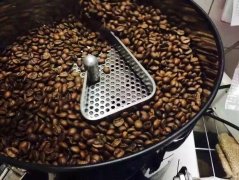
Introduction of major coffee producing areas in the world
Coffee comes from coffee beans, which are harvested and processed from the fruit of trees. Coffee trees grow at the center of the equator, between latitudes of 25 degrees south and north, and are called the homes of tropical or subtropical countries called coffee belts. At present, there are about 60 coffee-producing countries. Coffee is produced in South America, Central America, the West Indies, Asia, Africa, Arabia, the South Pacific and

Introduction of high-quality coffee beans with flavor and taste in Puerto Rico coffee producing areas
Puerto Rico covers an area of 13790 square kilometers, with mountains and hills accounting for 3x4 of the island. The central mountain range stretches from east to west, stretching from Puerto Rico to Puerto Rico, from high to low, with the coast as a plain. The highest peak, Mount Pengta, is 1338 meters above sea level. Belongs to the tropical rain forest climate, [8] the rainfall is sufficient, the average temperature in January is 24 ℃, the average temperature in July is 27 ℃. Vulnerable to hurricanes

The main coffee producing areas in the world introduce the types of fine coffee beans.
Coffee comes from coffee beans, which are harvested and processed from the fruit of trees. Coffee trees grow at the center of the equator, between latitudes of 25 degrees south and north, and are called the homes of tropical or subtropical countries called coffee belts. At present, there are about 60 coffee-producing countries. Coffee is produced in South America, Central America, the West Indies, Asia, Africa, Arabia, the South Pacific and
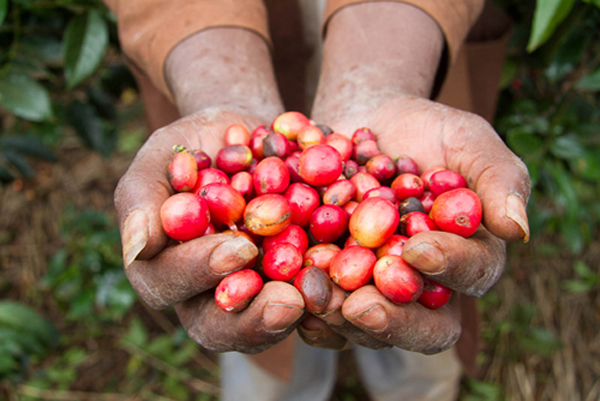
The most detailed introduction to coffee beans in the world. Coffee beginners must see the knowledge points
Coffee comes from coffee beans, which in turn are harvested and processed from the fruits of trees. Coffee trees grow at the equator as the center, between 25 degrees north and south latitude, known as the coffee belt tropical or subtropical countries home, coffee production countries currently have about more than 60 countries, coffee production in South America, Central America, West Indies, Asia, Africa, Arabia, South Pacific and
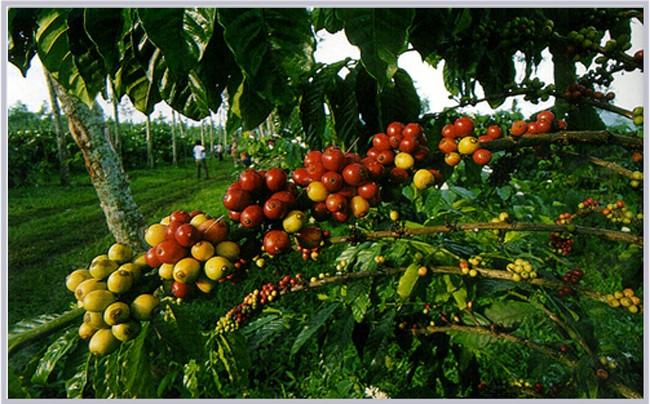
Coffee Estate Knowledge Points: Collection and classification of world boutique coffee estates in detail
Coffee comes from coffee beans, which are harvested and processed from the fruits of trees. Coffee trees grow at the equator as the center, between 25 degrees north and south latitude, known as the coffee belt in tropical or subtropical countries home, coffee beans are currently. Coffee comes from coffee beans, which in turn are harvested and processed from the fruits of trees. Coffee trees grow at the equator.

Colombian coffee growing environment Colombian coffee culture
The history of coffee cultivation in Colombia can be traced back to the Spanish colonial era in the 16th century, and there are many theories about the history of coffee in Colombia: one: it is said to come from the island of Haiti in the Caribbean and from El Salvador in Central America. Second: in 1808, a priest introduced coffee beans to Colombia for the first time from the French Antilles via Venezuela. One of them

A brief introduction to the market price of Dominica Santo Domingo coffee varieties with mellow taste
The temperate climate in Dominica is conducive to coffee cultivation, and the best places to grow coffee are the Barahona region in the southwest and the Cibao Valley north of Santiago, Dominica's second largest city. The northern region, represented by Hibao, and the southern region, including Okayabani Santo Domingo, produce good coffee. Among them, Santo